
Sometimes, a single moment can change the way a place is experienced for generations to come.
In 1992, Capricorn Caves hosted its first wedding in the Cathedral Cave. It was a beautiful setting for a very special day, with the enormous domed chamber providing a natural backdrop unlike any traditional wedding venue.
But there was an unexpected problem when the bride’s grandmother arrived in a wheelchair. She hadn’t been expected to attend, and unfortunately, there was no way to get her into the Cathedral Cave. She was left behind while her granddaughter was married in the cave.
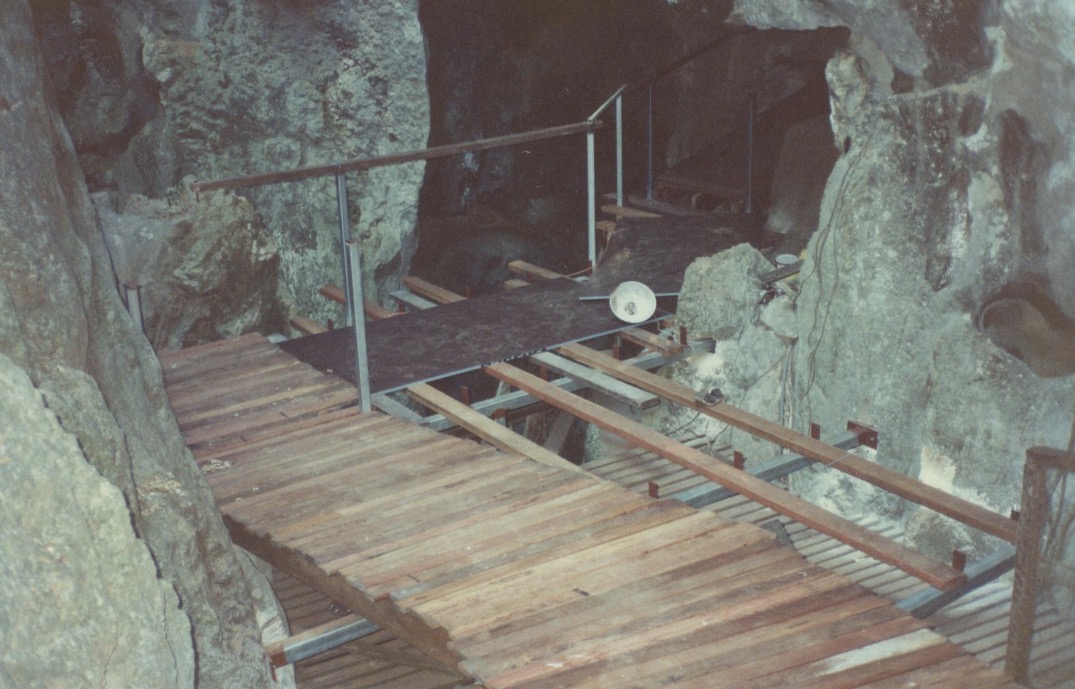
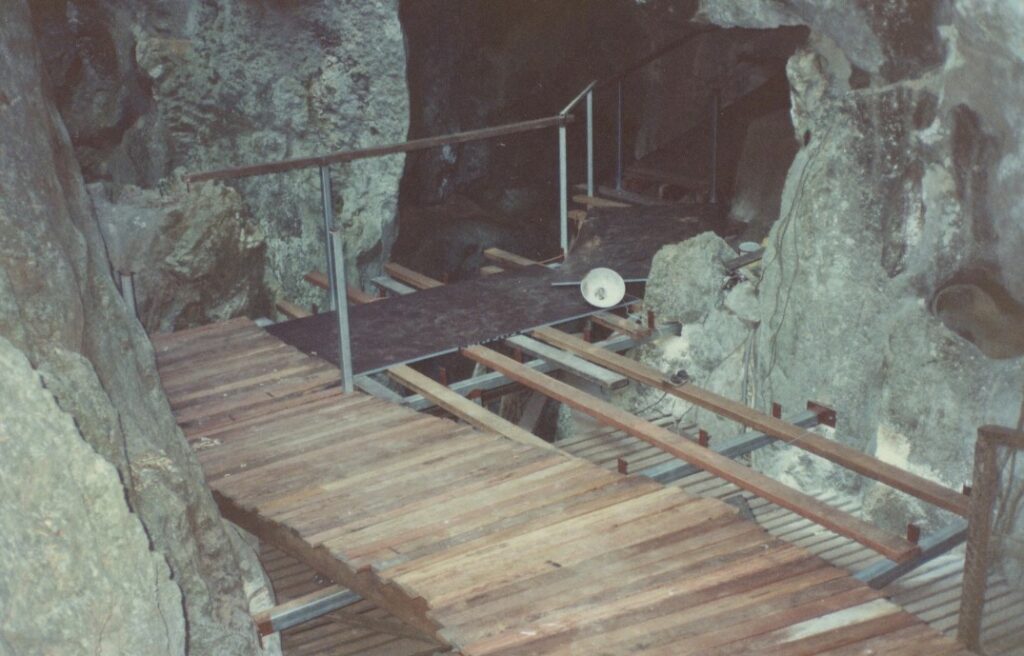
For Ken Augusteyn, that wasn’t good enough. Rather than accepting that the cave couldn’t be accessed by everyone, he set about finding a solution. Ken designed and built wheelchair access into the Cathedral chamber, carefully considering both accessibility and the need to protect the delicate cave environment.
It was no small undertaking!
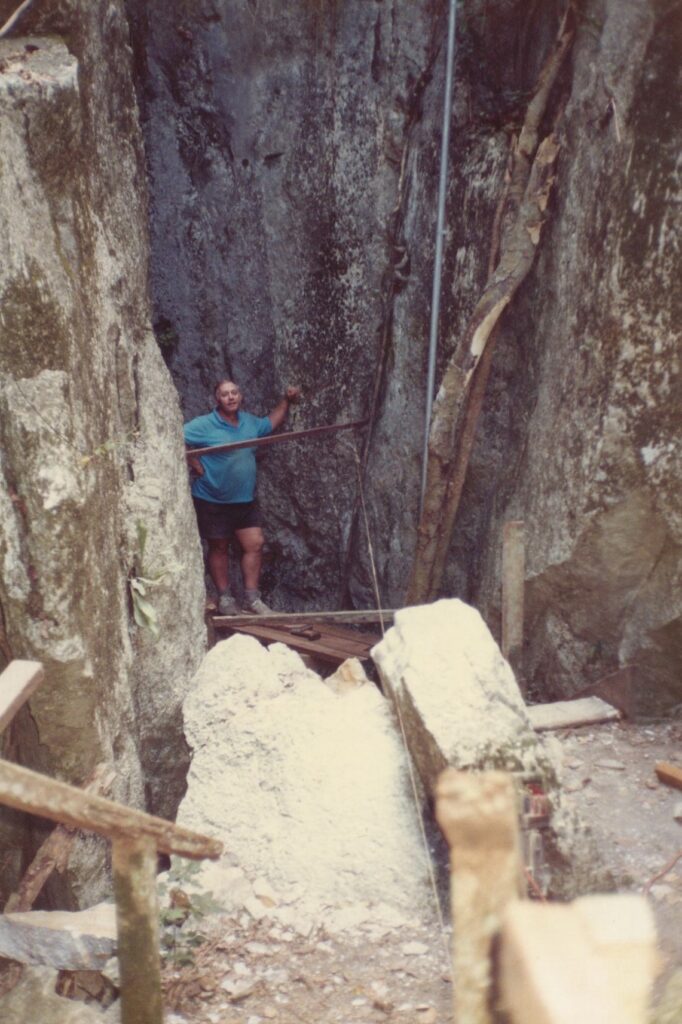
Six tonnes of timber and three tonnes of steel were carried into the cave to construct the ramp and pathways, with the materials and design carefully selected to minimise the impact on the cave while maximising visitor views.
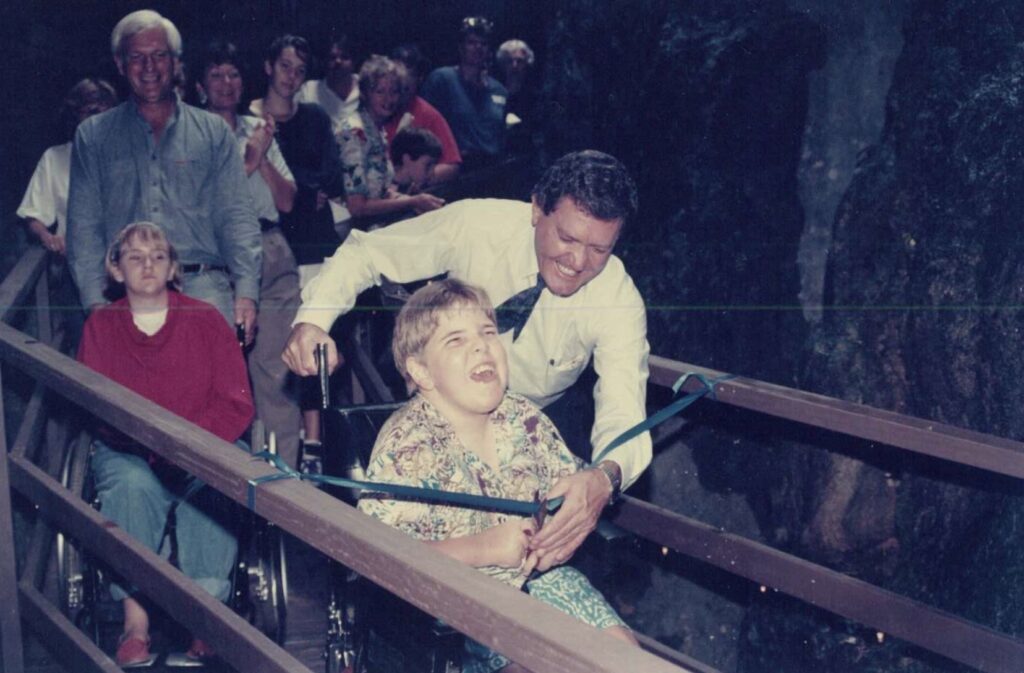
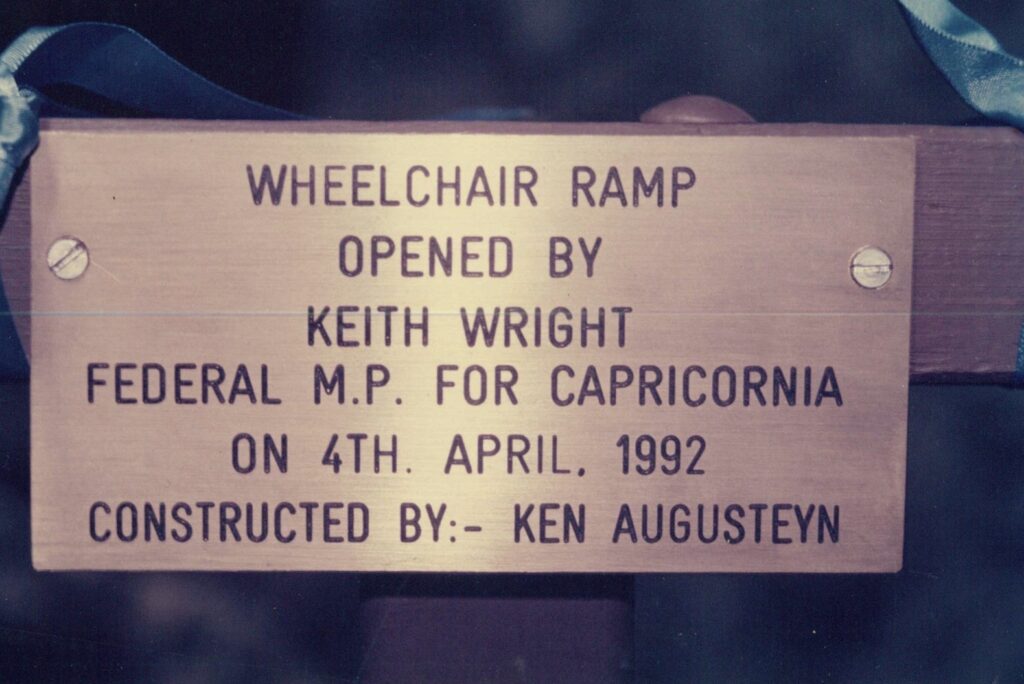
The completed wheelchair ramp was officially opened on 4 April 1992 by Keith Wright, Federal M.P. for Capricornia. A plaque commemorating the occasion was placed within the cave, recognising Ken Augusteyn as the builder of the access.
The result was a significant change to the visitor experience at Capricorn Caves. The new access meant that people who previously couldn’t enter the Cathedral Cave could now experience it for themselves, and Capricorn Caves became one of only three wheelchair-accessible caves in Australia at the time.
Today, the ramp remains part of the Cathedral Cave experience and serves as a reminder that looking after a special place isn’t only about protecting the caves themselves. It’s also about finding ways for more people to experience and enjoy them.
And the commitment to accessibility hasn’t stopped there. In recent years, Capricorn Caves has continued to improve access across the property, including the addition of a new DDA-compliant walkway providing improved access to Cathedral Cave. Accessible parking and facilities have also been upgraded, making it easier for more visitors to experience the caves with greater comfort and confidence.
More than 30 years after that first wheelchair ramp was built, the goal remains the same: finding ways to make this extraordinary place more accessible, while respecting and protecting the natural environment that makes Capricorn Caves so special.
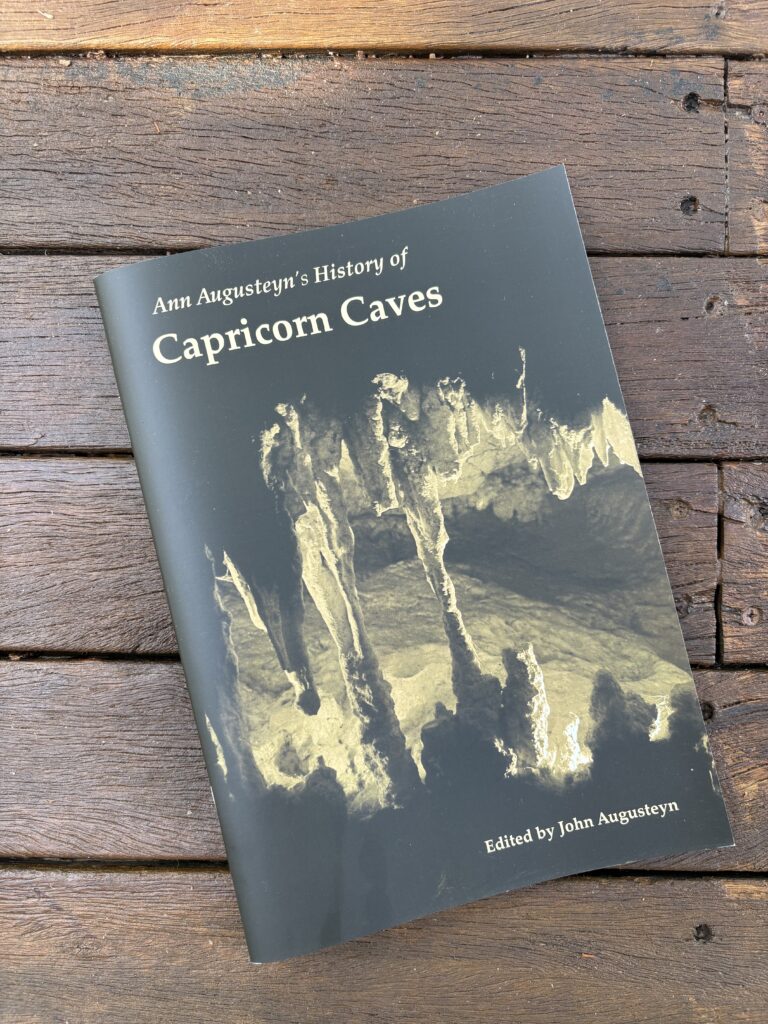
This story is just one of many found in Ann Augusteyn’s History of Capricorn Caves, edited by John Augusteyn.
The book brings together more than a century of stories about the people, challenges, discoveries and moments that have shaped Capricorn Caves, from the early Olsen family years through to the Augusteyn family’s stewardship of the property.
Grab yours from the kiosk today!