

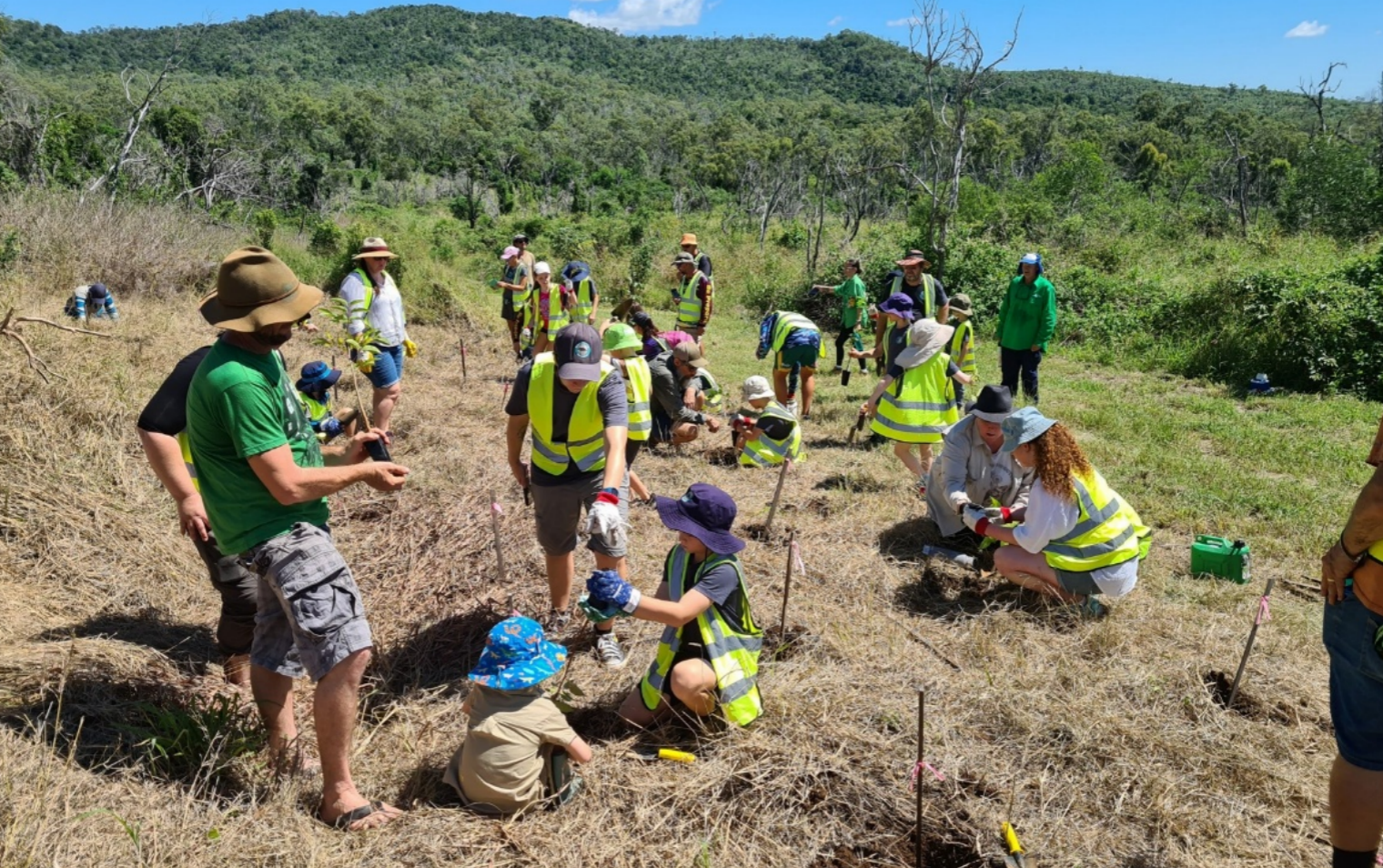
When visitors explore Capricorn Caves, they discover far more than a remarkable limestone landscape.
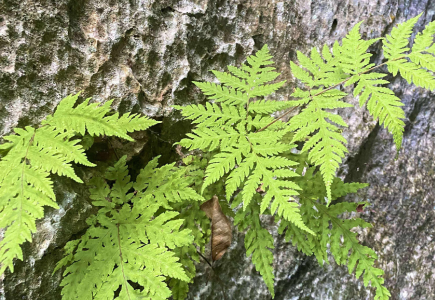
Behind the scenes, an ongoing conservation effort is helping protect some of Central Queensland’s most significant and vulnerable species, including the Endangered cave fern, Tectaria devexa, and the Vulnerable Ghost Bat, Macroderma gigas.
At the heart of this work is the restoration of Semi-Evergreen Vine Thicket, a unique vegetation community surrounding parts of the cave system.
These dense vine forests provide important habitat for native plants and animals, but they also play another vital role. They help maintain the stable conditions inside nearby caves, including temperature, humidity and airflow, that many cave-dependent species need to survive.
Although Tectaria devexa occurs across parts of Asia and the Pacific, it is exceptionally rare in Australia.
Once abundant within the Capricorn Caves system, the population suffered significant declines following prolonged drought, Cyclone Marcia in 2015 and the devastating Mt Etna bushfires in 2018.
These events damaged large areas of surrounding vegetation and reduced the protective canopy around cave entrances. Increased sunlight, heat and drying winds changed the delicate conditions inside the caves, resulting in the loss of many mature ferns.
The response was not simply to replace the plants. Instead, Capricorn Caves shifted its focus towards something much bigger: restoring the habitat that allows the species to survive naturally.
Extensive weed control, revegetation and ongoing habitat restoration have since become the cornerstone of the recovery effort.
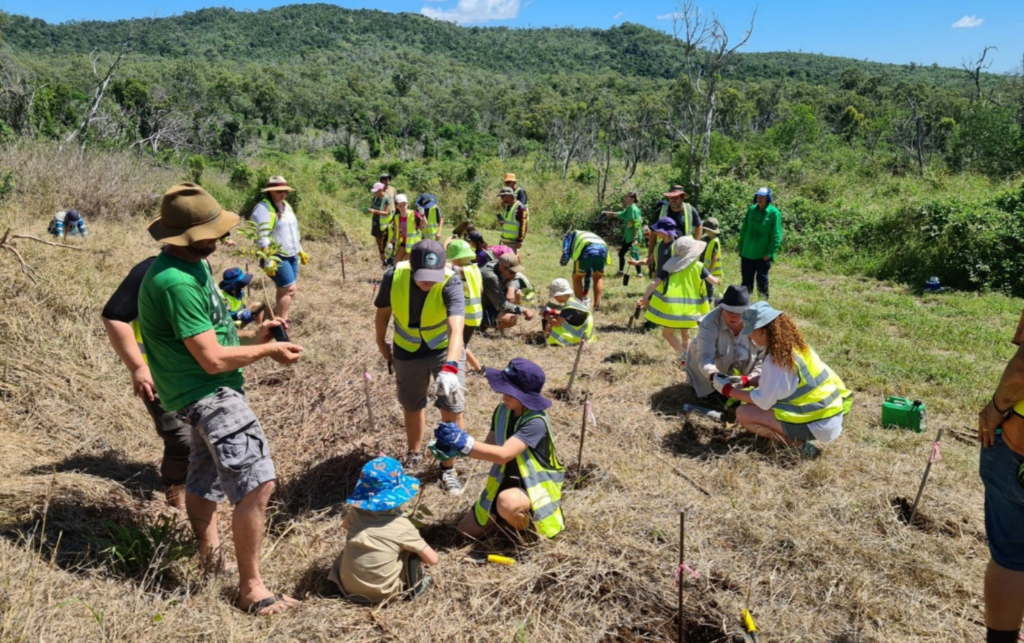
Conservation is rarely a one-person job, and the restoration work at Capricorn Caves is a perfect example.
Since 2024, students from Central Queensland University’s Certificate III Conservation and Ecosystem Management program have worked alongside Capricorn Caves staff on restoration activities, particularly on the northern side of the cave system, an area heavily impacted by the 2018 bushfires.
Trainees from Capricornia Catchments’ Certificate I Conservation and Ecosystem Management program have also played an important role in planting, maintenance and habitat recovery.
Capricorn Conservation Council has partnered with Capricorn Caves through community workshops and National Tree Day events, helping bring the wider community into the restoration effort.
Local schools, Darumbal trainees, Woorabinda Rangers, volunteers and many other community members have also contributed their time and energy.
Together, these efforts have resulted in more than 1,000 native plants planted, and approximately one acre of degraded habitat restored.
It’s a powerful reminder that meaningful conservation happens when communities work together.
The benefits of restoring vine thicket habitat extend well beyond the recovery of one rare fern. Capricorn Caves is also important habitat for the Vulnerable Ghost Bat, Australia’s largest carnivorous bat.
Ghost Bats depend on suitable cave conditions, particularly stable temperatures and humidity. These conditions are especially important for maternity colonies and young bats.
By restoring native vegetation around cave entrances, Capricorn Caves is helping rebuild a natural buffer against heat, wind and moisture loss. This work supports the recovery of Tectaria devexa, while also helping maintain suitable conditions for other cave-dependent wildlife, including Ghost Bats.
While some areas of Capricorn Caves are managed for tourism and education, other caves remain dedicated to conservation, helping minimise disturbance to sensitive wildlife populations.
Conservation at Capricorn Caves continues to evolve. The Capricorn Caves Geonature Conservation Foundation is developing new citizen science programs that will give community members the opportunity to contribute directly to conservation knowledge and environmental stewardship.
Long-term monitoring of cave conditions, habitat health and species recovery will also continue to play an important role in guiding future conservation work.
Much of this work happens quietly behind the scenes, but sharing these stories is an important part of protecting the natural environment.
Every guided tour at Capricorn Caves includes an environmental focus, giving visitors the opportunity to learn about the unique ecosystems, threatened species and conservation work that exists beyond the public cave network.
Because conservation isn’t just about protecting a place. It’s about helping people understand why it matters.
The recovery of threatened species is rarely the work of a single organisation. At Capricorn Caves, it is the result of partnerships, scientific knowledge, community involvement and a long-term commitment to protecting this remarkable landscape.
Together, these efforts are helping restore habitat, protect biodiversity and create a more resilient future for some of Central Queensland’s most remarkable cave-dependent species.